


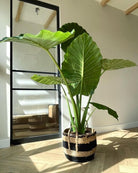
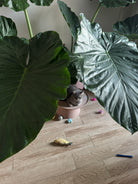
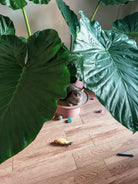
Alocasia Macrorhizza 150-160cm
Size: 150cm, comes in nursery pot
🌿 Alocasia macrorrhiza Care Guide
☀️ Light
-
Ideal: Bright, indirect sunlight.
-
Tolerates: Some direct morning sun, but avoid harsh afternoon sun as it can scorch the leaves.
-
Too little light: Can lead to leggy growth or smaller leaves.
💧 Watering
-
Water regularly during the growing season (spring & summer).
-
Let the top 1–2 inches of soil dry out before watering again.
-
In winter, reduce watering — the plant enters semi-dormancy and needs less moisture.
-
Avoid overwatering — it’s prone to root rot.
🌫️ Humidity
-
Prefers high humidity (60%+). Ideal for tropical or greenhouse settings.
-
Use a humidifier, pebble tray, or mist the plant in drier environments.
-
Low humidity can cause browning edges on leaves.
🌡️ Temperature
-
Thrives in warm temperatures: 65–85°F (18–29°C)
🪴 Soil
-
Use a well-draining, rich potting mix.
-
Mix suggestions:
-
1 part peat or coco coir
-
1 part perlite or pumice
-
1 part compost or worm castings
-
🌱 Fertilizing
-
Feed with a balanced liquid fertilizer every 2–4 weeks during spring and summer.
-
Do not fertilize in winter.
-
Over-fertilizing can lead to salt build-up or leaf burn.
🔁 Repotting
-
Repot every 1–2 years or when rootbound.
-
Choose a pot 2 inches wider than the current one.
-
Spring is the best time to repot.
✂️ Pruning
-
Trim damaged, yellow, or old leaves at the base.
-
Clean shears with alcohol to prevent disease spread.
🐛 Pests & Problems
-
Common pests: Spider mites, mealybugs, scale, aphids.
-
Treat with neem oil, insecticidal soap, or regular wiping of leaves.
-
Root rot: Caused by soggy soil.
-
Leaf droop or yellowing: Often from overwatering or poor drainage.
🌸 Dormancy Note
In colder or low-light months, Alocasia may go dormant, dropping leaves. This is normal. Keep soil lightly moist and wait for spring growth.